Showing posts with label Musings. Show all posts

Friday, February 6, 2015

Farewell to a friend

Today my favorite corner of the internet rides off into the sunset and I’m finding I have nowhere to grieve.  Mournful text messages have gone unanswered, attempts at conversation draw blank stares and I’m passing the afternoon at my desk somewhere between a brooding solitude and actively trying not to cry.  After years of drawing an oddly and deeply personal sense of community from a blog that structurally prevents direct reader-to-reader dialogue (via, say, a comments section), it is somewhat fitting that I have nowhere to commiserate its end but within my own mind.

And so I turn to the blog I’ve neglected to eulogize the blog I’ve read almost every day since graduating from college in 2007.  In fact I can say, without hyperbole, that Andrew Sullivan’s The Dish has been one of the most influential forces shaping how I've come to understand myself and the world around me in the time since.  It has, over the years, among many other things:
  • Taught me (and constantly reinforced) the value of reasonable discourse in place of knee-jerk, inflexible doctrine
  • Been a much-needed, dependable source of support and inspiration as I gradually grew to understand and take better care of myself
  • Introduced me to The Atlantic - I am still a subscriber, though am perpetually a few months behind on my reading
  • Provided me with innumerable tidbits that made me smile (especially videos like Carl Sagan reading from Pale Blue Dot, the Star Wars AT-AT as a dog, and various montages of travel images and slice of life over time collections)
  • Forced me to pay attention to stories I otherwise would have ignored
  • Framed the internal debate I was having with myself over spirituality in a meaningful way

Above all else, the Dish has grown into a trusted touch-point for me - a place I come to get smart, thoughtful perspective on all sorts of things going on in the world, to gain a sense of communal reaction to current events, to explore new ideas and new inspirations, or just to pass some down time at work.  Though I understand and support Andrew’s decision to hang it up, I'd be lying if I said the thought of losing all of this didn't make me feel empty inside.

Tuesday, October 1, 2013

Begin the hours of this day slow


October dawns and the days grow heartbreakingly beautiful.  Fall is my favorite season for reasons as varied as crisp weather, holidays, and Terps sports.

As the leaves turn crunchy and colorful, I think often of my last encounter with fall - during an Argentine April.  I can't help but feel a tinge of melancholy when I ponder the peace and simplicity of my time in Argentina, compared with my life now.  Not that my life is at all bad, but when held against a perfect two weeks whose most pressing worries were "Which delicious steak should I eat tonight" or "Should we nap in the plaza before or after getting gelato," it's not hard to seem dreary by comparison.

Which brings me to this poem, "October," by Robert Frost.  I am not much for analyzing poetry, so I don't actually have a clue what Frost's intent was in writing this.  But, like the onset of my favorite season, it makes me feel cheery, with just a hint of reflective sadness.  And helps me to put health issues, mortgage payments, and life's assorted other complications back into perspective.  Where they belong.

October, by Robert Frost

O hushed October morning mild,
Thy leaves have ripened to the fall;
Tomorrow’s wind, if it be wild,
Should waste them all.
The crows above the forest call;
Tomorrow they may form and go.
O hushed October morning mild,
Begin the hours of this day slow.
Make the day seem to us less brief.
Hearts not averse to being beguiled,
Beguile us in the way you know.
Release one leaf at break of day;
At noon release another leaf;
One from our trees, one far away.
Retard the sun with gentle mist;
Enchant the land with amethyst.
Slow, slow!
For the grapes’ sake, if they were all,
Whose leaves already are burnt with frost,
Whose clustered fruit must else be lost—
For the grapes’ sake along the wall.

Thursday, November 24, 2011

The quirks that make the world go 'round

I spent some time, a couple of weeks ago, skimming this forum, where an American novelist had asked for help from foreigners to identify quirks that might stand out to first time visitors to the United States.  The cascade of responses are at times blatantly stereotypical (frequent laments about guns, portion sizes, loud voices, and car culture) but, for the most part, subtle and quite fascinating.  I had no idea, for instance, that Americans are often perceived as broadly friendly and smiley, almost to a fault.

As many posters point out, the vast size of the US leads to a wide variety of regional differences.  Similarly, the concept of what is unusual differs greatly depending on where a foreigner is from.  On this bright, sunny afternoon of my favorite holiday, I am grateful for the intricate web of customs, settings, and attitudes that make America (and every other country) so enthrallingly unique.  It simultaneously makes the world an infinitely more interesting place to explore and helps reinforce the comfortable, deeply ingrained sense of home that comes from being among familiar surroundings.

Happy Thanksgiving.  Below are some excerpted observations, ranging in tone from wondrous to bemused to pure, unadulterated snark.

I was startled to find out that "God Save the Queen" has alternate lyrics.

In general, the scale of things is boggling to Europeans for a while and continues to be boggling in small ways for a long time. Fridges are HUGE compared to upright or under-the-counter European fridges. The default size for milk is the gallon, not the pint. Endless agonizing choices in the supermarket -- which of these 30 types of canned beans do I want now? Roads that feel twice as wide as they should be. Bank lobbies the size of railway stations.

Cities where streets follow a grid. And almost all streets allow cars. As a European I'm accustomed to look for the city center; a place where there are no cars, where streets are meandering, where there are terraces to sit outside and have a coffee. A place that's amenable to walking, to hanging out and enjoying the atmosphere. I did not find such a space in the american cities I've been to. And it prevented me from enjoying the place.

You don't need to drive far from a major city like SF to reach endless expanse of nature. Amazing.

That they probably have the best customer service culture in the world, but can rapidly descend into being the most aggressive if challenged.

I would also reiterate that customer service people here must be super well trained or something, because they are uniformly pleasant and helpful. Every person seems to take a lot of pride in their work, the US is definitely a very strongly work-centric culture. People seem to talk a lot more about slacking off, than actually slack off.

"Uh huh" is an appropriate response to "thank you"

The blatant patriotism displayed by Americans is disconcerting to Britons. There are Stars & Stripes everywhere and it's seen as perfectly normal to display the flag on your home.... The flying of the Cross of St George is more usually associated with right-wing sympathy to the British National Party than a display of patriotism or national pride.

Everyone complains bitterly about the suckitude of government and is suspicious of it but they all follow the rules anyway even if nobody is watching.

A readiness to order pizza at 10 p.m. although one has had a full meal at 6:30.

People ask "How are you?" as a casual greeting, but no one really cares how you are. He feels like it's too personal of a question to ask a stranger and doesn't like the insincerity of it.

People will often say "we should get together" or "you should come over sometime for dinner" but don't actually mean it, they just say it to be polite.

General ignorance about other places and cultures, and how awful many native English speakers are at reading/writing/speaking their one and only language, yet have little tolerance for non-native speakers who may speak several other languages.

When Americans kid one another, they will wait a few seconds and then let the kidee know that they were just kidding. Every time. This shocked me for a while.

Saying "hil-ar-i-ous" out loud instead of laughing.

 American drivers are far more likely to stop and let a pedestrian cross the road, even when there is no marked crossing. Possibly due to the novelty of seeing someone on foot.

Striking up conversation with strangers, smiling at strangers, sharing stories and knowing/ empathizing looks with strangers. This also throws me for a loop, especially all the smiles and random hellos. Cheerfulness is an indefeasible social onus. On the other hand, people in the U.S. are in my experience very polite when it comes to staring (i.e. not doing it).

Americans are social optimists. They assume all interactions will be pleasant until they are not.

On the upside, the readiness of American people to explain something to you or show you how some weird contraption or gadget works - things simple to a american but that a european might have never seen - without seemingly poke fun or look down at you is very heart warming. So, lack of cynicism and apparent moral generosity are the greatest American qualities as far as I'm concerned.

People not realizing that a lot of the rest of the world puts the day first then the month, so when I first got here someone asked me if we had 17 months in Australia when they saw my drivers license.

I have been introduced to people from as wider ranging places as India, Mexico, Trinidad and Italy with what seemed the assumption as we were all from this strange place called "overseas" we'd all know each other or have something in common.

Everything is new. I'd never experienced a physical craving for old buildings before visiting the US! Possibly related: I got the impression that 'the past' is more recent in the US, events in living memory are seen as 'historic'.

The silly warnings on products to prevent lawsuits.
Lawyers have much more cultural cachet than in almost any other country. The idea that lawyers are on a par with doctors as far as people with high-class occupations

There are so many straight lines on maps in the US. When I first came here as a kid (while my parents were in graduate school), we studied the US map in school and I remember being astounded that it literally looked like someone had used a ruler to mark off the state boundaries. Most other places have much more irregular edges.

Paradoxically, although you guys have this disgustingly puritanical attitude to alcohol, when I go into an American bar and ask for a shot of scotch I get a major shot of scotch. I love the way you just put a glass down and fill it instead of measuring a miserly 1/6 or 1/4 gill shot via an optic.

The comparative difference in pickpocketing / theft. In Europe, you leave a bag somewhere, or your wallet at a bar, and you'll just never see it again. People just seem to have their eyes open for an easy score; and someone will have spied it and grabbed it no question. In the U.S. its very likely that someone will turn it in, or figure out a way to return it.

Tuesday, April 12, 2011

Two notable anniversaries

Today marks a pair of momentous anniversaries, each recalling a very different period of history, yet both, in a way, reinforcing the power of human spirit and innovation.

On this day in 1861, 150 years ago, Confederate soldiers in South Carolina fired the first shots of the Civil War.  After the state seceded, Union troops barricaded themselves in Fort Sumter, on an island in the mouth of Charleston’s harbor, and Confederate forces attacked.  What followed was a bloody, protracted, four year slog over slavery and the intersecting authority of the states and the federal government.  Over 620,000 Americans died in this conflict – roughly the same number of casualties as in all other wars combined – and they were fighting over the preservation of both our country and, indirectly, our brand of representative democracy.

Abraham Lincoln expressed the gravity of the stakes most famously in his Gettysburg Address:
...that this nation, under God, shall have a new birth of freedom - and that government of the people, by the people, for the people, shall not perish from the earth.
Another eloquent paean to the triumph of American democracy comes from Sullivan Ballou’s well-known letter to his wife, Sarah.  Ballou, a major of the 2nd Rhode Island Volunteers in the Union army, expresses the emotions he is feeling on the eve of a major battle, and captures heartrendingly his conflicting loves of family and country.  The version below comes from Ken Burns’ seminal documentary, The Civil War, and is set to Jay Ungar's beautiful musical piece "Ashokan Farewell."  Its poignancy drives me to tears.


Both Ballou and Lincoln would likely be saddened by some of the anti-government rhetoric saturating the nation these days.  I have no issue with people who believe in the efficacy of conservative, market-based solutions to our country’s problems, but we must never cast our government itself as an antagonist.  So much has been sacrificed in the building of this institution and every American should live with an abiding sense of reverence for the system – this nation that we have struggled to develop and maintain - even when we may disagree over specific actions and policies.

Exactly a century after Fort Sumter, 50 years ago, Soviet cosmonaut Yuri Gagarin became the first human in space.  Until seeing Google’s “doodle” banner today, I had no idea these dates coincided.  A very cool side-note, this website tells you when satellites will be passing overhead in the night sky wherever you live – apparently this week is an excellent time to spot the International Space Station.  Where the Civil War was, in some ways, a test of the durability of one of humanity’s most important developments in civil and political philosophy, Gagarin’s spaceflight was a showcase of ingenuity and innovation.  Though set, at the time, against the grim backdrop of the Cold War, we can now celebrate this milestone for what it was – our first breach of the final frontier of human exploration.

That both of these important events came at times of great tension and conflict is, perhaps, no coincidence.  For better or for worse, it seems that much of our greatest progress has been born out of necessity, during times of danger.  With that in mind, when confronted by tough situations, we can, I suppose, only aspire to do right by our forebears and hope that the lens of history views us kindly.

Friday, April 1, 2011

"But I wouldn't miss it for the world"

My sentimental nature aside, it speaks, I think, to the filmmaking genius of Pixar that I can't so much as think about Toy Story without feeling an emotional pang.  That trilogy illustrates so perfectly the nuanced, sometimes alarming process of growing up and, in fact, tracks quite well with the chronology of my life.  It debuted when I was in elementary school as a cool movie about toys and friendship and wrapped up during my mid-20's, playing well with my growing sense of nostalgia for the passing years.

The video below is a tribute to 25 years of Pixar animation.  There are several films in there that I have not seen but, bolstered by the Toy Story clips, those that I have made watching this a heart-warming, poignant way to spend five minutes.

Thursday, February 24, 2011

Sylvia Poggioli's sign-off

One of the few highlights of last week’s dreaded Winter Membership Campaign on WAMU was Kai Ryssdal reading a list of his top ten favorite things about public radio. It was one of those pre-recorded spots by national personalities, meant to pry the money out of your wallet, that ended with the Marketplace host saying “and here’s how you donate” before transitioning abruptly into Caryn Mathes repeating the station’s phone number about four times.

Not that I needed a tongue-in-cheek list to remind me (unfortunately, the only item I can remember is “Sylvia Poggioli’s sign off”), but there are so many things that I love about public radio. This is particularly true with so much going on in the world lately (which I hope to be able to write about soon, with a couple of deadlines and 14 hour work days behind me, for now). And, as much as I enjoy complaining about these campaigns, I understand why they’re necessary and will gladly continue to contribute to help keep these programs on the air.

It’s tough to choose and rank, but here is an attempt to capture my ten favorite things about public radio:
TEN: The Writer’s Almanac, a segment I actually used to hate because it airs at 6:36 am and signals that it’s time to crawl out of bed. Now that I usually sleep in slightly later, when I hear it, it feels like something special.

NINE: The ability to access, and download, segments for free online.

EIGHT: Hourly newscasts that help ground you in the middle of listening to a lengthy interview about the local food scene on the Kojo Nnamdi Show, for example. I eagerly anticipate the moment when you find out which newscaster will step up to the microphone and critique the minute differences in their delivery of "From NPR News in Washington..." My all-time favorite is retired (see number three), but, of those who remain, I am partial to: Ann Taylor, Jack Speer, and Lakshmi Singh. I am not partial to Craig Windham, although I guess he’s growing on me.

SEVEN: Storytelling. Mixed in with reports about budget deficits and regime changes are fascinating stories – tracking a particular unit in the military from Camp Lejune, North Carolina to the front lines, interviewing scientists about quirky discoveries, purchasing a “toxic asset” and following its progress, reviews of movies, music, and books. NPR is more than just the headline news.

SIX: How easy and convenient it is to listen and digest all of this while driving.

FIVE: The range of emotions covered in a good episode of This American Life

FOUR: The distinctive variations of the Weekend Edition theme, perfectly suited for my mood and outlook on Saturdays and Sundays. Other theme songs that get me going: Morning Edition, All Things Considered, The Diane Rehm Show, The World

THREE: The beloved trifecta of Robert Siegel, Noah Adams, and Carl Kasell (and Steve Inskeep makes four).

TWO: The varied, unexpected, and sometimes strange course that conversations can take after beginning “I heard the other day on NPR…”

ONE: The news itself, particularly NPR’s comprehensive international reporting, with correspondents stationed all over the globe. In addition to the vitally important coverage, I really love the sense of knowledgeable, nuanced consistency that comes with reporters handling a particular region or beat. Floods in Pakistan? I know Julie McCarthy’s on it. Major Supreme Court Decision? Nina Totenberg. These voices have become comforting, trusted informants, helping to shape my understanding of current events and the world. You don’t get that as easily from other news outlets.
And here's how you donate.

    Thursday, February 10, 2011

    "Insularity is bad"

    The Daily Dish turned me on to this fantastic piece from National Review Online's Dennis Prager, who is about to visit his 100th country.  In it, he extols the many nuanced and powerful virtues of traveling.  Some of my favorite passages:
    Nearly everyone grows up insular. The problem is that vast numbers of people never leave the cloistered world of their childhood. This is as true for those who grow up in Manhattan as it is for those who grow up in Fargo. And as for college, there are few places as insular and cloistered as the university.

    Insularity is bad because at the very least it prevents questioning oneself and thinking through important ideas and convictions. And at worst, it facilitates the groupthink that enables most great evils. Although one can hold onto insular and bad ideas even after interacting with others, it is much harder to do so, especially when one interacts on the others’ terms, as must be done when traveling to other cultures (and especially when traveling alone).

    It is therefore one of the most maturing things a person can do. It is also one of the most humbling....  One of life’s great moral challenges is to see the stranger as fully real. While travel does not guarantee that one will see all others that way...it is very hard to do so without travel.
    It is, perhaps, illustrative of my own inherent insularity that when I consider thoughtful, measured commentary, I do not often think of conservative publications like the National Review.  In all fairness, judging by some of the crass drivel to which they give a legitimate platform (not to mention the way in which they dispatched the very reasonable David Frum), I would argue that this sentiment is not always very far from the truth.  Which makes Prager's reflective piece all the more wonderful.

    Traveling engenders the curious, open-minded spirit that should form the basis of our journey through life.  I try to make an effort to adhere to these principles as best I can.  Here's hoping that I find a way to visit 100 countries on the way.

    Monday, January 3, 2011

    Celebrations of the ordinary

    For the same reason that I cherish this photographic book, many broadcasts of public radio's This American Life, and features in magazines and on blogs such as Andrew Sullivan's face of the day and view from your window, I love this video.  Titled "Words" by Radiolab and NPR and intended as visual poetry, it is a series of very short pieces of footage, stitched together with a beautiful background score.  Each moment builds upon the last, sometimes in very creative ways - puzzling together the transitions and connections made me smile.

    But my favorite thing about the video -and the way in which it is related to all of those other pieces - is the compelling, touching way that it captures a broad cross-section of ordinary life.  Taken as an entire series, This American Life and the faces of the day do the same thing.  The Oxford Project, though focused on small town in Iowa, is monumental in its ability to chronicle the hopes, dreams, and disappointments of a set of people, weaving those thoughts into a larger narrative about the American experience.

    Anyway, enjoy the video - it is fantastic.

    Monday, December 20, 2010

    Pre-holiday hodgepodge

    For some reason, the hectic pace of the holiday season seems to stunt my ability to fully formulate eloquent thoughts.  So, in an effort to not completely neglect my blog this December, outlined below are a few things that have been on my mind.  I may expand on some of them, either in the lull between Christmas and New Year’s Eve or later down the road, or I may not.

    The historic repeal, this past weekend, of the Don’t Ask, Don’t Tell ban on gays serving openly in the military pleases me - both because the policy was discriminatory and detrimental and because it will quiet some of the annoying squawking coming from the left.  Though I don’t inherently care as much about this aspect of gay rights as, say, marriage equality, it is, nevertheless, a momentous step in the right direction for our country.

    On the topic of Congressional action, I’ve also been very happy with the pace and bipartisan nature of the “lame duck” session.  Since returning to Washington after the elections, Congress has gotten quite a bit done: a tax deal and economic stimulus that angered the more ideological wings of both parties (which, to me, makes it all the more appealing), progress toward a vote on the crucial New START nuclear arms reduction treaty with Russia, and, of course, the aforementioned DADT repeal.  The failure of the Dream Act is truly disheartening and New START is not yet ratified, but, for once, pragmatism has seemed to characterize the overall course of events in Washington more than frustrating partisan gridlock (with some notable exceptions).

    In a break with the child-like excitement of years past, I reacted to this season’s first snow – a small one, at that – with a sense of barely contained distaste.  Perhaps a remnant of last winter’s blizzard fatigue, perhaps simply an indication that I have become a 25 year old curmudgeon.

    I have not yet read this book, recommended by Andrew Sullivan, but, as an imaginative exercise in philosophies and interpretations of the afterlife, it sounds fascinating.  Thought-provoking excerpts here.

    Egged on by a candy-filled advent calendar and the abundance of sweets that show up on the office’s kitchen table during the holidays, I find myself recently unable to resist the following things: Reesee’s Peanut Butter Cups, chocolate chip cookies, ginger cookies, and cupcakes.

    It alarms me, in a somewhat glum, existential way, that 2011 is just two weeks away.

    Recently, I received the first hard copy in my subscription to The Atlantic.  Occasionally, I am struck with frivolous ideas when it comes to reading – that I should buy a non-fiction book based on the interesting-sounding description on the back cover, without first investigating reviews and verifying its readability, for example, or the perpetually incorrect assumption that I possess the patience and intellectual curiosity to fully digest an issue of The Economist.  I’m hoping The Atlantic does not fall victim to a similar fate - so far, I’m doing ok.

    Michael Giacchino’s beautiful score from Lost continues to delight and haunt me, six months after the series finale.  Grooveshark allows me to listen whenever I am the mood for a transportively emotional experience.

    Given the proper appetite and a particularly tasty batch, I could probably eat an entire carton of Clementines.

    Over the past week, the way that Maryland has treated head coach Ralph Friedgen, an alum who led the program back to national relevancy a decade ago, is despicable.  He deserves better than to have unnamed sources from the university fuel rumors about his status, particularly after orchestrating a huge turnaround season and winning ACC coach of the year.  Most dishonorable, to me, is the conduct of our new A.D., Kevin Anderson, who earlier this season definitively confirmed Friedgen’s job security for next year and now, as of this afternoon, has officially reneged on his show of support.  This has been handled unreasonably poorly and, combined with the basketball team’s mounting losses and the heartbreak of the premature end to soccer season, has sapped most of my enthusiasm for Terps sports (for now, at least).

    I’m disappointed that tonight’s lunar eclipse is going to happen while I’m asleep.

    Life is far too fleeting to give up, even temporarily, the pursuit of happiness.

    Thursday, October 7, 2010

    October, once again

    As this blog lumbers into its third year of existence, I’m still mostly happy with what I’ve managed to piece together here.  This afternoon, I took advantage of some of Google’s new design tools and updated my template a bit.  With that will, I hope, come a renewed focus on posting content.  It would be nice to write more often, as my pace in 2010 has been fairly sedentary.  But overall, as a collection of glimpses of moments in my life and the world, I think this blog serves its purpose well.

    One of the things I noted the last time I reflected on this effort was how much enjoyment I took away from reading friends’ blogs.  I mused that this had become a backdoor way of keeping in touch with people who I don’t get to see regularly and that the mere knowledge that we occasionally read each others’ thoughts instilled a subtle sense of closeness.  Unfortunately, save Tom, who has continued posting about his life in New York and his evolving career as a stroller-parking playwright, all of my friends’ blogs have gone quiet lately.  If I had to name one regret for the year, it would be that.

    Otherwise, all is good in my corner of the blogosphere, as well as in Washington, where we are in store for a beautiful, sunny, 70 degree fall weekend.  Soon the leaves will sport all sorts of glorious colors and I will carve a pumpkin.

    Friday, September 17, 2010

    Playing tourist

    After a cruddy Thursday morning at work and a busy past couple of weeks, I decided to take today off. I had no particular plan for the day, and considered spending it shopping, reading, or sitting on the couch, watching dvds.

    Instead, I decided to hop on the metro and indulge in one of my favorite pastimes, usually reserved for crisp weekend afternoons in the spring and fall: roaming aimlessly around DC with a camera and an intrepid spirit.

    Today my adventure was slightly more focused. I have been trying for almost two years to find a good time to see the newly renovated American History Museum, so that topped my to do list. The rest was improvised.

    After crying my way through exhibits on the military, 18th century fulfilment of the American Dream, and, of course, the original Star Spangled Banner, I had lunch and set out for the Tidal Basin. I often forget about the FDR Memorial, and especially never remember just how large it is, but I think it's one of my favorites.

    Now, gazing across the water at the Jefferson (another favorite), as planes take-off from National behind me and families, joggers, and a teenager wielding a fishing rod roam by, I feel contentedly awash with patriotism. DC, I think, has a unique power to do that. Despite being the seat of such nasty, divisive political rhetoric, the city is also a magnet for Americans from all walks of life as well as foreign tourists who seem happy to shrug off the prevailing anti-Americanism in the world. All come to marvel at the history, the beauty, and, more than anything, the enduring institutions of our nation, generously scattered, to grandiose effect, around downtown DC.

    I love living here and, most of the time, love playing tourist in my own city.

    Wednesday, April 21, 2010

    Lives I'm not living

    In the three years that have elapsed since graduating college, I've grown up quite a bit.  Much of this can be attributed to natural maturation, as well as to the demanding responsibilities and earlier bedtimes associated with a full-time job.

    Another, somewhat inevitable, part of getting older is reflection, frequently accompanied by mock despair.  Though a often the subject of reminiscence and joking among friends, the cold reality of passing time also lends an element of existential angst to these musings: Have I chosen the right career?  Should I be concerned with getting married and starting a family?  Am I happy with the direction of my life? 

    Mostly I can dismiss this worrying as silliness, brought on by thinking about the future as something increasingly immediate and less theoretical.  I recognize and am endlessly grateful for the fact that I lead a fantastic life.  Yet I find myself wondering if, while cheapened somewhat by their melodramatic tone, these are real, valuable questions that I should be pondering at this point in time.

    I work as a marketing and business development coordinator for a local architecture firm.  Although I've learned a lot in my three years on the job, and, through my participation in the professional organization SMPS, am frequently exposed to peers with admirable bodies of accomplishments, there is nothing about my work that inherently moves me.

    While I get a degree of measured pleasure from completing a proposal or receiving a compliment on my performance, it is mostly fleeting rather than personally fulfilling in any kind of meaningful way.  And though I look up to many of the more experienced marketers that I've met through SMPS, it's difficult to try to emulate their success without wondering whether or not "Marketing Manager of a D.C.-based architecture/engineering/construction industry firm" is really what I want to be in ten years.

    Although this is something I ponder occasionally, the reason I've been focused on it so acutely the past few nights is Dr. Marsha Guenzler-Stevens.  As anyone who has ever attended a formal reception at Maryland knows, she is an unbelievably talented speaker.  Beyond her inspirational rhetoric, I also have an enormous amount of respect for her ability to remember seemingly small things about everyone she meets, no matter how briefly.

    Marsha delivered the keynote address, as she's done for the previous two years, at last Sunday night's O.N.E. UMD conference, a networking dinner with current and former student leaders that I attended as a recent graduate.  She structured her speech around the principles of the Leadership Challenge, a model that identifies five crucial attributes of great leaders, and spoke glowingly about former students who, through their time on campus and their achievements after graduation, embody each of these concepts.

    Maybe it's the fact that I actually know one of the people that Marsha mentioned, or maybe I'm just a sucker for an inspirational speech (I am), but hearing about all of these impressive feats struck a chord within me.  It's not that I necessarily feel a need to save the world, and I have no illusions about finding a perfect job at which every day is fun.  But the idea of dedicating my life to something about which I am incredibly passionate is appealing on a very deep level.  I want to feel driven to do work that makes me, and other people, proud.

    The problem I've always had, from choosing a major to trying to apply for jobs, is that I have trouble envisioning exactly what would motivate me to such a great degree.  I'm reasonably sure that anything that would truly excite me, at least initially, would involve living in a foregin country for a period of time.  But aside from that, I'm just not sure.

    Steve suggests that I explore new opportunities gradually, in the hope that something will stand out.  Though I certainly don't disagree with this approach, and try hard to take steps to expose myself to exciting, new experiences through traveling and volunteering, for example, I worry that this is not enough.

    Maggie has a thought-provoking quotation splashed across the bottom of her blog from Jonathan Safran Foer's Extremely Loud and Incredibly Close:
    Sometimes I can hear my bones straining under the weight of all the lives I'm not living.
    If I were ever going to make a dramatic change in my life, ever going to pick up and move to some exotic locale to pursue a new passion, the time would be now.  As the years pass, I'll likely develop increasingly more connections and responsibilities at work and in my personal life.  Any combination of an advanced career, a house, or a family would make it difficult to justify taking such a drastic step.

    There are times that I can picture my potential future, as an experienced and reasonably successful marketing professional, volunteering on the board of SMPS.  This path could certainly be rewarding, in a lot of ways, and the longer I stay in my current position, the more powerful the inertia that holds me in place.  But, by the same token, each day that I spend here, commuting through traffic to do work that I don't think I love, the more convinced I become that I need to seek out something more fulfilling. 

    Friday, October 23, 2009

    Look both ways

    Last night on the way home from work, I nearly struck a pedestrian. Shortly after turning onto 16th St. from Georgia Ave., I noticed a woman jogging on the right sidewalk. I was in the left lane and had a green light, so I thought nothing of this and continued driving. The next thing I knew, there was a gray sweatshirt in front of my car and I was slamming on the brakes and blindly swerving into the lane next to me. After nearly causing an accident, this hooded women had the audacity to glare at me. Had my window been open, I would've screamed something rude.

    Feeling shaken up about this when I got home, I decided to go running myself (in a gray shirt, no less). I've actually been jogging a lot lately, since we've had such nice weather this fall. Growing up, I always thought I hated jogging. Sprinting over short distances to beat my cousins at races was one thing, but sustained exertion was always quite another. But these past couple months, I've discovered that I like it a lot more than I ever thought I could.

    For one thing, it's nice to know that I'm getting some exercise. It's probably been about a decade since I last had any sort of regular physical exertion in my life. Combined with my love of food, I know how unhealthy that lifestyle is. Long term health benefits aside, exercise also just makes me feel good. Part of this might be endorphins, but I think a lot of it is mental too.

    Another aspect of running that I've come to appreciate is the rhythm. Building a jog into my daily schedule provides another familiar wrinkle to my routine, even if I don't choose to run every evening. Beyond that, the physical act of jogging - feet pounding on the sidewalk, heavy breathing - is soothing. I often find myself turning this sounds into a pattern in my mind, repeating the same couple bars of a song that's stuck in my head. All of this is very conducive to uninterrupted thinking, much like driving with the radio off.

    What might appeal to me most about running, though, is the sense of exploration associated with it. Maggie and I used to talk about how envious we were of our friend Tom for being able to just trot around for miles and see new places at will. Even though I barely jog for more than a mile, and almost always take the same route through the neighborhood, I've started to feel hints of this. Running after work, I'm occasionally treated to the savory scent of dinner wafting from the windows of houses. As I pass people and trees and schools on the sidewalk, my mind is constantly stimulated: "That's a friendly looking dog." "I'd hate to have to mow that lawn." "Those leaves are a really nice color." Jogging is freeing.

    As the weather gets colder, I'm not sure if I can keep up the habit. I'd certainly like to, and if I can manage to jog semi-regularly over the winter, I've promised myself new running sneakers next spring. I'm having fun doing something healthy. And, despite my gray tshirt in the dusk, I am always careful not to dart out in front of oncoming traffic.

    Friday, September 11, 2009

    Whispers in the hallway

    I originally intended to title this posting “Never forget,” because I strongly believe in the importance of embracing history and drawing on it to make sense of current events. But I could not get past the connotation of that phrase, co-opted as it has seemingly been by xenophobic war-mongers. Instead I chose to reflect on a personal memory of that day, eight years ago.

    Walking between second and third periods, I passed a guy named Jake on the stairs. Jake was the type of person who would say anything for attention, so when leaned towards me, shouting “They bombed us! The Pentagon and the twin towers,” I was understandably skeptical. Shaking my head ruefully, I distinctly remember thinking “God help anyone who would try to bomb the Pentagon.” Convinced that Jake was an idiot, I kept walking to class.

    But as I made my away across the school to the remote first floor orange hallway, where Mr. Leveille’s class met, I began to notice something different. It’s difficult to articulate what exactly caught my attention. Maybe it was the passing glimpse of students, huddled around the TV in a classroom. Or maybe it was snippets of overheard conversations, echoing in the quiet hallways. Concrete reasons aside, by the time I strolled into 4th period Foundations of Programming, I knew that something seemed very off.

    Idly chatting with my fellow classmates about this, a girl named Ashley thought something was wrong too. We approached our teacher and asked him if we could turn on the TV, because that we thought that “something might have happened.” Though a little confused, he shrugged and flicked it on, agreeing to let us watch until the bell rang. I will never, ever forget his reaction as he stared numbly at the screen.

    We sat glued to the TV for the entire period. Watched, dumbfounded, as the second (north?) tower crumbled to the ground. At one point Mr. Leveille, who at the time couldn’t have been much older than I am now, muted the sound and struggled to find something appropriate to say to us. In retrospect, I cannot imagine how impossibly difficult this must have been, to be tasked with trying to teach at this moment; to make sense out of something utterly senseless. Taking a deep breath, he told us something like, “We’re going to turn the sound back on and watch this for the rest of the day. This is something that, for now, is far more important than Foundations of Programming. What happened today is probably going to change the rest of our lives and we need to pay attention to it.”

    As a 16 year old high school student, I had no capacity to understand just how true this was. September 11 fundamentally altered the Bush administration, to say nothing of the overarching course of world history. Indeed, without 9/11 we’d have had no Afghanistan, no Iraq, no secret CIA torture prisons, no Patriot Act, and maybe no Barack Obama.

    Many have used this anniversary to reflect on the far-reaching consequences of the terrorist attacks. But what I find most striking is their impact on an individual level. If I can recount, in such vivid, flashbulb moment detail, my memories of that bright, sunny morning, I’m sure that every other American can too. Much attention is paid to the heartbreak of those who lost loved ones in the attacks, or to the two wars that form part of that day’s brutal legacy. And rightfully so. But September 11th impacted everyone, if, for no other reason, because each of us can remember exactly what we were doing when we heard. Wouldn’t that make a moving collection of short essays – a broad selection of simple memories?

    In this way, beyond its obviously visible impact on politics and war and many family’s lives, 9/11 imprinted itself on our national consciousness. We will never forget. Not because we have been given a mandate to tear apart our nation and the Middle East in search of extremists. But rather because we cannot, and should not, lose sight of the most formative and meaningful moments of our lives.

    Wednesday, September 2, 2009

    I always hate cyclists

    A friend at work forwarded me a list of "random thoughts of our generation." Though the primary purpose of the list was humor, I found it interesting that I agreed with so many of them. I don't know if these observations are all specifically applicable to my generation or if they speak to human nature in general. But a lot of them are kind of astute. Some examples:
    1. Nothing sucks more than that moment during an argument when you realize you're wrong.

      Yes, agreed. This makes me uncomfortable and forces me to decide what I value more at that moment in time: extracting a shallow rhetorical victory by pretending to know what I'm talking about or rolling over and admitting defeat. One guess as to which of these impulses typically wins out.

    2. Sometimes, I'll watch a movie that I watched when I was younger and suddenly realize I had no idea what the f was going on when I first saw it.

      This happens to me all the time.

    3. There is a great need for sarcasm font.

      I have always thought this, particularly because I am kind of sarcastic and always afraid that when I type the exact opposite of what I mean, people will take me seriously.

    4. I have a hard time deciphering the fine line between boredom and hunger.

    5. Every time I have to spell a word over the phone using 'as in' examples, I will undoubtedly draw a blank and sound like a complete idiot.

      When giving out my email address for work, I think I've resorted to "L, as in... lollipop."

    6. I can't remember the last time I wasn't at least kind of tired.

      Even if this isn't true, it feels that way sometimes. And whenever someone asks "how are you?" in the morning (or any time), one of my fall back responses is "I'm alright... tired, though."

    7. You never know when it will strike, but there comes a moment at work when you've made up your mind that you just aren't doing anything productive for the rest of the day.

    8. As a driver I hate pedestrians, and as a pedestrian I hate drivers, but no matter what the mode of transportation, I always hate cyclists.

    9. It really pisses me off when I want to read a story on CNN.com and the link takes me to a video instead of text.

    10. How many times is it appropriate to say "What?" before you just nod and smile because you still didn't hear what someone said?

    11. Do you remember when you were a kid, playing Nintendo and it wouldn't work? You take the cartridge out, blow in it and that would magically fix the problem. Every kid in America did that, but how did we all know how to fix the problem? There was no internet or message boards or FAQ's. We just figured it out.

      I never had Nintendo, but reading this kind of blew my mind. How did everyone know to do that? Word of mouth, I guess. It must rank up there with Homer's epics as one of the greatest oral traditions of all time.

    Kind of amusing, I thought. There were others that dealt with wanting an "avoid ghetto" route option on google maps, loving napping more as a grown up than as a kid, and a well-deserved mocking of the band Nickelback.

    September is here and the weather has been gorgeous all week (and will continue to be for the next several days at least). College football season starts this weekend. Labor Day (and accompanying day off and barbecues) falls on Monday. I went to the Orioles game yesterday with Sam and am now going to leave work and go outside into the warm, humidity-free sunshine. All is good.

    Tuesday, August 11, 2009

    Why I (continue to) blog

    This fall will mark a year that I’ve been writing this blog. Although I’ve been neglecting it lately, that’s been more a function of a lack of time at work than any lessening of interest. In fact, this blog has been far more successful than I ever imagined it would be. Not because I’ve accrued vast numbers of readers (I have not, though I find it somewhat flattering that people look at it once in awhile), but rather because I strongly doubted my ability to keep this up.

    Looking back at some of my earliest posts, this blog was very, very political. I think I knew at the time that one of the primary drivers behind starting a blog was my desire to have a place to sound off about the election campaign without risking arguments with my Republican friends. After the election frenzy faded, I struggled a bit to find topics about which I felt like writing. I still have this problem. It’s helped, though, that I’ve gradually added quite a few semi-regular “features” – traveling photos, recipes, and music – that I can post with minimal effort when lacking time or inspiration to write something thoughtful.

    A happy, albeit unintended, consequence of blogging has been my ability to keep in touch with other friends. When separated by distance, it can be easy to fall out of regular contact with people that I care about. Though reading a blog is no substitute for an actual conversation, it helps me feel that I’m connected to my far-flung friends. Each of their blogs provides a window into their lives. It sounds voyeuristic, but reading about my friends’ thoughts (and knowing they occasionally read mine) mitigates their absence from my day to day life.

    Best of all, I’m pleased with my blog’s ability to reflect various aspects of my personality – love of food, music, and travel; stubborn yet (I hope) reasonable political liberalism; fascination with outer space; and a strong, yearning desire to experience and celebrate the sense of possibility engendered by the American Dream, filled as it is with patriotism, inspiration, disappointments, and hope. There are parts of my life that do not make it onto this blog. Indeed, I almost never write in detail about work, or my roommates and family, or my weekend social life. But these are things that are immortalized elsewhere – on facebook, in family photo albums, and in the collective memories of the people I know well.

    I started this blog with the stated intent to use it as a snapshot of my life, a recording of thoughts, feelings, and impressions that might otherwise be lost to the forgetful passage of time. With more time and a computer at home, I could do a much better job of this. But, almost a year in, I’m fairly happy with where things stand.

    Monday, August 10, 2009

    Amen? Amen.

    I haven’t been to church in more than a month. It’s not that I’ve been actively avoiding it – aside from one arbitrarily skipped Sunday, vacation and other commitments have conspired to keep me away. What I’m conflicted about is my attitude towards religion, which, lately, has been fairly apathetic.

    Nothing about Westmoreland has changed – the people there are still exceptionally welcoming, admirably involved in the community, and dedicated to pursuing social justice with a progressive bent that closely mirrors my own views – yet I still find myself growing increasingly distant. Forgive me if it seems like my feelings are a little schizophrenic, but I suspect that this latest bout of uncertainty has little to do with Westmoreland itself. I still believe that I’ve found, in that church, a wonderful community well worth joining. It is the larger issue of God and religion that is currently vexing me.

    When I first wrote on this topic, I expressed confusion over the role of religion in my life. Though I’ve attended services for more than seven months now, none of that root uneasiness has really vanished. I’ve learned quite a bit about theology and I feel more comfortable now with the idea of church than I ever have in the past. Yet as the novelty of being a part of this new community has faded, I’m reminded more and more of many of the things that made me skeptical of religion in the first place.

    My thoughts on this are illustrated quite well by a recent episode of This American Life, in which Dan Savage lambasts the Catholic Church for driving him away from religion with its seemingly backwards stance on many issues, despite a strong desire on his part to believe. To me, the most moving passage follows Savage’s revelation that, since his mother’s death, he’s been tempted to put aside his reservations and return to the church after decades away.

    But when I am tempted, when I feel like maybe I could go through the motions, return to the sacraments, take what comfort I can, the pope goes to Africa and says that condoms spread AIDS. Or an archbishop in Brazil excommunicates a Catholic woman for getting her nine year old daughter an abortion, but not the Catholic man that raped the nine year old girl. Or I contemplate how the church views me and the two people I love most in the world: my boyfriend of 14 years and our 11 year old son, and I think “I can’t even think this.”
    Though, like Savage, organized religion sometimes offends me, I am as much to blame for my conflicted feelings as the church. Just this past weekend, I attended a beautiful wedding ceremony in the rural mountains of Pennsylvania. The minister’s televangelist-style sermon was, objectively speaking, a little ridiculous. But even without the corny delivery, exaggerated “Amen? Amen”s, and the repeated emphasis on marriage being between a man and a woman, there is little chance I would’ve taken him seriously. I have this problem nearly every time I encounter a church official, be it at weddings, funerals, or on TV. For some reason, I involuntarily recoil from these people, assuming (often incorrectly) that their views are irreconcilably different from my own.

    This borderline closed-mindedness leads me to snicker at things like little red pew pencils emblazoned in gold with the phrase “Jesus Never Fails” and roll my eyes at overly long prayers. Perhaps worst of all, however, this immaturity is not restricted to unfamiliar settings. Once, at Westmoreland, I had to fight down laughter when a member of the choir sang a solo titled “He Touched Me.” I realize that, to most churchgoers, this absolutely reeks of blasphemy, but that’s certainly not my intent. It would be one thing if I were a stereotypical, self-assured liberal atheist, confident in my views and content to engage in occasional Bible-mocking. But instead I’m struggling to fit God into my life – a confused 23 year old who happens to find some aspects of organized religion in modern society both anathema and irrepressibly humorous.

    This contradiction is a problem, and I don’t know how to make it go away. I can accept that I will never agree with the Pope’s beliefs on social issues. The United Church of Christ is extraordinarily progressive, and reasonable people across all faiths are able to look past the very literal interpretations of religion favored by many extreme right wingers. But I don’t know how to change what’s inside me, or even whether or not I should be trying.

    The last time I had dinner with Rev. Bob Maddox, he tried to reassure me, explaining that many members of the church community have unanswered questions about God and that my uncertainty was not at all unusual. This is, of course, somewhat comforting and one of the reasons I’m so grateful for my time at Westmoreland to date. But I cannot shake the sense that I’m acting disingenuously, going to church, reciting the Lord’s prayer, taking Communion. Though I feel strongly that religion should not be an exclusive experience, this does not shield me from the fear that I do not belong. Who am I to sit in church every week, if I cannot definitively answer whether or not I believe in God? I want to, but is that enough? I don’t know the answer to these questions.

    Thursday, July 2, 2009

    Who more than self, their country loved

    I love the Fourth of July. Patriotism so often gets co-opted by politicians and used as a euphemism for support of neoconservative foreign policy or belief in American exceptionalism. It can often have a truly ugly connotation. But not on this holiday. Aside from giving us an excuse to grill, watch fireworks, and stay home from work, July 4th provides us an occasion to celebrate the dreams of our nation.

    From the somewhat unintentional idealism of our Founding Fathers to the wounds of slavery and civil war, during innovative economic booms and painful recessions, through peacetime and harsh wars, the history of the United States is filled with moments of both pride and shame. It is, of course, important to learn about each. But none of these shared experiences would have been possible without the Declaration of Independence and the Revolutionary War that it sparked. That document, with its self-evident truths and equally created men and unalienable rights, embodies so much of what I think of as the American spirit.

    So this weekend I’ll listen to Ray Charles belt out America the Beautiful (a song that I associate with this day even more than the Star Spangled Banner) and eat a burger and some watermelon. But at some point, maybe while watching fireworks explode into the night sky, I’ll be sure to reflect on the founding principles of this fine nation and remember all of the people who have suffered and died to defend and advance these ideals, both domestically and abroad. It is through their courage and determination that we can confidently say that we have a better, more perfect union today than we did 233 years ago. More importantly, this optimism makes me hopeful that the future can only get brighter.

    Happy Independence Day.

    Thursday, June 25, 2009

    A lifelong to do list

    I have trouble getting through a single day at work without writing a to do list. This helps me focus my efforts and organize my thoughts, ultimately empowering me to accomplish tasks more efficiently. Might the same be true for my lifetime goals? This to do list spans the spectrum from mundane to ridiculous and will undoubtedly change as I continue to grow and re-evaluate my desires.
    • Live long enough to see more exciting space exploration, and maybe colonies on the moon, Mars, and beyond?
    • Get married and raise a family.
    • Stop losing hair, at least until I'm nearing 40.
    • Travel extensively across the world, to all seven continents.
    • Live abroad for awhile.
    • See our beautiful Earth from outer space.
    • Have an "in" at a Chipotle restaurant that would permit me to get free guacamole on all of my burritos.
    • Stay in touch with the people I care about, even when separated by distance and time.
    • Develop super powers that would allow me to fly, or, in lieu of this, sky-dive or hanglide from high in the air.
    • Watch the Terps win more national championships, particularly in football, basketball, and soccer.
    • Find a job that I absolutely love.
    • Become rich enough to accommodate all of these wishes, especially those involving traveling.
    • Be able to take the metro to work.
    • Know what truly reciprocated love feels like.
    • Speak more languages.
    • Hike at least part of the Appalachian Trail.
    • Get in shape enough to be able to go jogging for awhile to let off steam, run a 5K/partial marathon to benefit a cause, or just to explore a new area on foot.
    • Do a good job raising my children so that they love me and care for me when I'm old.
    • Have the opportunity to see the family members that I've lost, and will lose in the future, again, in dreams, heaven, etc.
    • Grow the popularity of soccer in the U.S., to the point where our professional league is respected and people will care when we someday win the World Cup.
    • See the Orioles field a consistently competitive team.
    • Learn to cook a wider variety of delicious foods, particularly creative, unique, and ethnic dishes.
    • Read more often, and be able to finish interesting academic books that I start.
    • Utter the words, "From NPR News in Washington..."
    • Regain confidence in my public speaking ability.
    • Practice and become more skillful at playing sports.
    • Enjoy the benefits of responsible, smart redevelopment projects that revitalize Southeast around the Anacostia River, the Southwest Waterfront, and downtown College Park.
    • Ride in a hot air balloon over a scenic landscape.
    • See the Democratic Party dominate national politics by governing fairly and maturely, bringing about lasting reasonable changes such as healthcare and entitlement reform, the protection of gay rights, and improved environmental stewardship.
    • Learn to play musical instruments, including the piano, the guitar, something brass, and something stringed.
    • Sing sufficiently in tune to be able to hum along to songs while other people are in the car.
    • Find a way to eliminate mosquitoes from the world without messing up the food chain.
    • Become better at sketching.
    • Live to see lasting world peace.
    • Figure out how I really feel about religion.
    • Live someplace where summers are less humid.
    • Bring my lunch to work more often.
    • Know the streets and neighborhoods of D.C. intimately.
    • Continue tailgating for Terps football games indefinitely.
    • Never, ever have a doctor tell me that I cannot eat what I want to eat.
    • Do good works for the community in a manageable way.
    • Be happy and successful.

    So I guess this has developed more into a massive (somewhat unrealistic) wish list, versus an actual to do list. But there's no harm in aiming high. As the greeting on my cell phone tells me every time I flip it open - seize the day!

    Monday, June 22, 2009

    To boldly go...

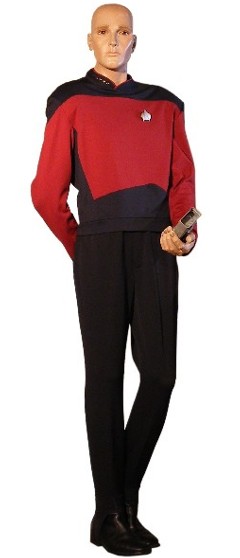
    After going to the movies for Father’s Day, I have an embarrassing confession to make: I love Star Trek. For those who know me best, this may not come as much of a surprise. Though I would’ve denied it throughout high school, in college I became more comfortable about at least acknowledging that I had watched the show growing up. But I haven’t really been completely honest with my friends about the extent of this love.

    To prove my nerdiness: I own dozens of Star Trek action figures and little toy ships called Micro Machines. In fact, I think I have at least three different versions of Patrick Stewart’s Jean Luc Picard alone – in 1st/2nd season uniform with stripe at the top, in ready room lounge coat, and as the old vineyard owner from All Good Things, the series finale. To complement this, I have playsets of both the bridge and main engineering from the Next Generation Enterprise (D, duh) that, when properly equipped with batteries and bulbs, light up and make noise. I owned a large red shirt that had iron-on pips for the collar, used to denote rank. (My mom never got around to ironing them on, leaving me embarrassingly rank-less). In elementary school, I used to parade around the woods with my friend John William, pretending to be Admiral Riker to his Luke Skywalker. We would carry plastic weapons (again, that lit up and made noises) and have exciting adventures of all sorts.

    Over the years, I have attended two Star Trek conventions, and even made my own tshirt for one of them by drawing on a white undershirt with fluorescent markers. My favorite part of the family’s vacation to the great national parks of the Southwest was Las Vegas, because we visited Star Trek: The Experience. For fun, I used to read books called Nitpickers’ Guides, which went episode by episode and pointed out bloopers and inconsistencies. I also own a Star Trek encyclopedia, which I would use to make up trivia questions, and a Star Trek version of Monopoly. Buried in my closet at home are five out of the seven seasons of The Next Generation on DVD. All of this has enabled me to name all five iterations of the TV series, as well as most of the main characters and actors for each.

    My point in writing this is not to thoroughly embarrass myself, though that is certainly a side consequence. Instead, I was inspired to write about Star Trek because I enjoyed J.J. Abrams’ new movie so much. On one hand, it shouldn’t be shocking that a Star Trek movie would be such a blockbuster. The premise involves exploration and adventure in outer space (something for which I have already established my love). But the problem with this franchise has always been that it’s too intellectual to be mainstream. The crew of the Enterprise grapples with complex issues of morality as often as it battles enemy warships. The plotlines of the TV series, in that sense, are brilliant. They far outshine, say, Star Wars (and the acting is generally much better too).

    Unfortunately, philosophical dilemmas are not enough to create great movies. Relying on the inherent appeal of Star Trek’s mantra – “to boldly go where no one has gone before” – works ok for television (though the later spin-offs became kind of tiresome), but for a two hour feature film you need the excitement and glitz of a lightsaber battle. Somehow this latest movie captures both. There is plenty of action, beefed up by modern special effects. But it’s balanced by heady themes that give the production more depth than a normal action movie – the need to balance logic with spontaneity (illustrated by impressively genuine portrayals of Spock and Kirk), a group of young officers forced to rise to face adversity, the sometimes debilitating pressure of being expected to live up to a great legacy.

    It’s neat to watch the way that Abrams masterfully pulls in new viewers and longtime fans. Concepts like Starfleet and the Federation and the Vulcan adherence to a logical existence are explained artfully, in a way that makes sense to the uninitiated yet doesn’t feel heavy-handed or forced. As a bonus, the film integrates tidbits that only a shameless Trekker would recognize, similar to the Easter Eggs on Lost (the kobayashi maru test comes to mind). Abrams even finds a clever way to deal with any nagging continuity issues that rabid fans might scream about (so relax, Phil Farrand).

    In all, it’s not so much that this is a legendarily great movie. But it’s very good, with fantastic characterization, a beautiful score, and the type of chemistry among cast and plot that hints at the potential for numerous successful sequels. The nearly universal praise for the film suggests that maybe there are many other closeted fans who have been inspired by such an unexpectedly respectable offering bearing the Star Trek name. Paramount Pictures owes J.J. Abrams big time for this. And, as a (newly unabashed) lifelong fan, so do I.